
Physician assistants (PAs) continue to play a critical role in addressing healthcare access challenges across the U.S. As healthcare systems navigate provider shortages, shifting patient demand, and ongoing burnout, many are turning to locum tenens PAs to maintain continuity of care.
Demand for locum tenens clinicians isn’t static. It fluctuates based on several factors, including workforce shortages, seasonal patient surges, geographic disparities in care, and broader economic conditions. For example, rural and underserved areas often experience persistent staffing gaps, while flu season or summer travel months can spike demand in urgent care and emergency settings.
Locum tenens PA compensation can likewise vary, with pay rates influenced by location, urgency, specialty-specific shortages, facility type, and assignment conditions (such as call requirements or schedule intensity).
The good news: PAs are uniquely positioned for locums work. Their broad clinical training and ability to work across specialties make them highly adaptable, giving them access to a wide range of opportunities with competitive pay and flexibility.
Below is a look at some of the most in-demand and highest-paying PA specialties right now, along with what’s driving that demand and estimated hourly pay ranges (based on aggregated locum tenens market averages).
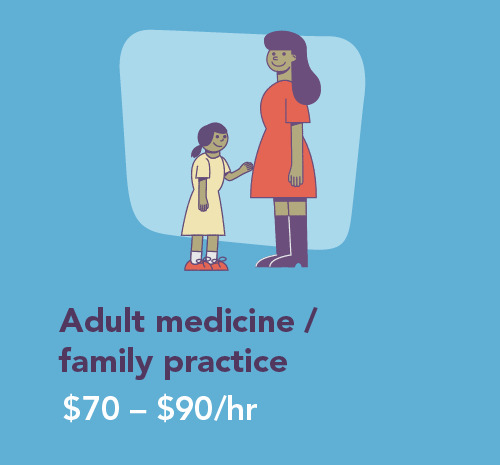
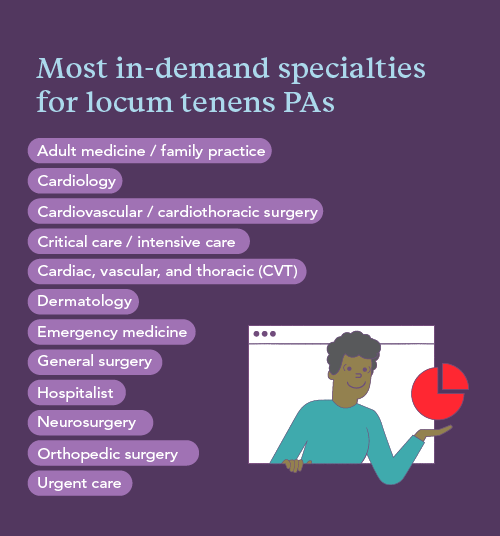
Adult medicine / family practice ($70 – $90/hr)
Primary care remains one of the most in-demand areas for locum tenens PAs. A major driver is the ongoing shortage of primary care physicians, projected to reach up to 86,000 by 2036, according to the Association of American Medical Colleges (AAMC).
At the same time, chronic disease prevalence continues to rise. The Centers for Disease Control and Prevention (CDC) reports that 3 in 4 adults in the U.S. have at least one chronic condition, and over half have at least two chronic conditions, increasing the need for ongoing, accessible care. PAs help fill these gaps, especially in rural and underserved communities.
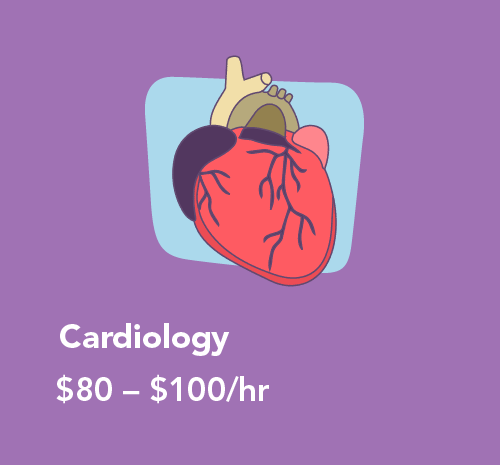
Cardiology ($80 – $100/hr)
The demand for cardiology locum tenens PAs is closely tied to the high burden of cardiovascular disease. Heart disease remains the leading cause of death in the U.S., responsible for about 1 in 3 deaths annually, according to the CDC.
Additionally, an aging population is increasing the demand for cardiac care. The U.S. Census Bureau projects that adults 65+ will outnumber children by 2035, further driving the need for cardiology services and the PAs who support them.
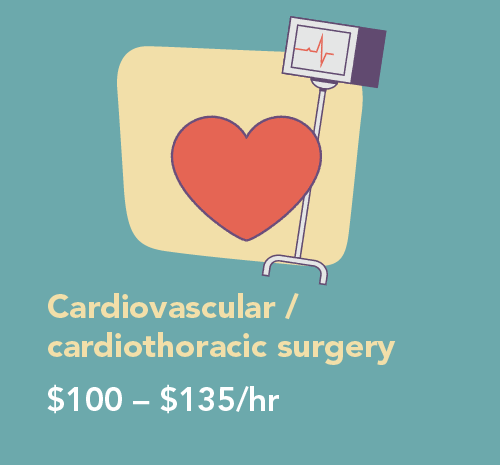
Cardiovascular / cardiothoracic surgery ($100 – $135/hr)
Highly specialized surgical fields like cardiothoracic surgery rely heavily on PAs for pre-, intra-, and post-operative care. Demand is rising due to increasing rates of cardiovascular procedures, with nearly 1 million cardiac surgeries performed annually in the U.S.
At the same time, the supply of cardiothoracic surgeons is limited, creating a need for skilled advanced practice providers to support surgical teams. Workforce projections indicate that cardiothoracic surgery is one of several specialties expected to face persistent surgeon shortages through at least 2030, reinforcing the need for PAs to help meet patient demand.
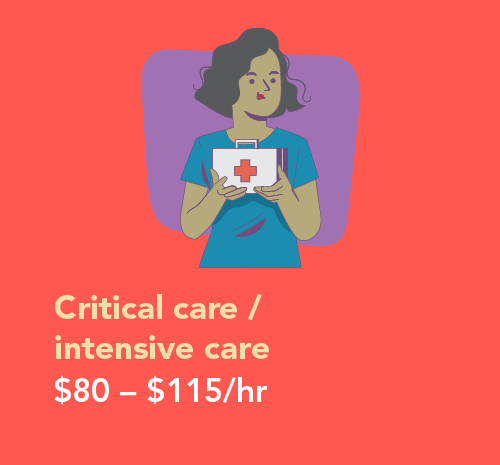
Critical care / intensive care ($80 – $115/hr)
Critical care demand surged during the COVID-19 pandemic and remains elevated due to ongoing staffing shortages and burnout. A study published in Critical Care Medicine found a nationwide shortage of intensivists, despite rising ICU demand, underscoring the ongoing need for advanced practice providers, particularly in underserved and rural settings.
As ICU occupancy rates remain high and the complexity of patients continues to increase, PAs are essential for maintaining care capacity.
Want to hear from other PAs? Get real stories and perspectives delivered monthly

Dermatology ($75 – $100/hr)
Dermatology continues to see strong demand, driven by both medical and cosmetic needs. Skin cancer is the most common cancer in the U.S., with more than 5 million cases diagnosed annually, according to the Skin Cancer Foundation.
Dermatologist shortages, especially in rural areas, mean PAs are often the primary providers for dermatologic care.
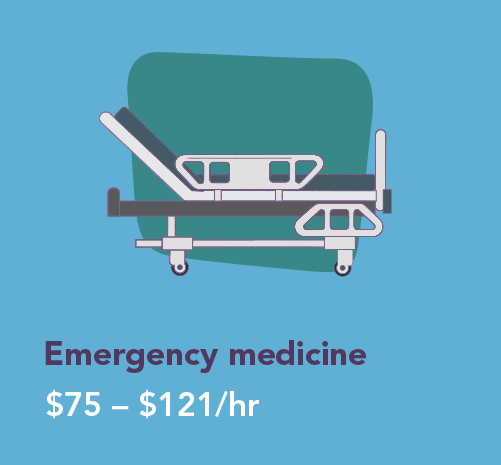
Emergency medicine ($75 – $121/hr)
Emergency departments rely heavily on PAs to manage high patient volumes and acuity. The U.S. sees more than 155 million emergency department visits annually, according to the CDC.
At the same time, the broader physician shortages and burnout seen across specialties are also impacting emergency departments, increasing reliance on PAs to maintain coverage, especially in community and rural hospitals.
General surgery ($90 – $110/hr)
General surgery services are in high demand due to both elective and urgent procedures. At the same time, the surgical workforce is aging—more than one-quarter of general surgeons are aged 65 or older, according to the AAMC—raising concerns about capacity as more approach retirement.
PAs play a key role in sustaining surgical services, assisting in the OR, managing post-operative care, and helping improve throughput and continuity across surgical departments.
Hospitalist ($75 – $100/hr)
Hospital medicine continues to grow as hospitals seek efficient inpatient care models. The number of hospitalists in the U.S. is estimated at roughly 44,000 and continuing to grow, according to the Society of Hospital Medicine.
With increasing hospital admissions, especially among older adults, PAs are essential for managing inpatient workflows and reducing physician workload.

Neurosurgery ($90 – $125/hr)
Neurosurgery demand is driven by both trauma and chronic neurological conditions. Traumatic brain injuries alone account for more than 200,000 hospitalizations annually, according to the CDC.
Given the complexity of care and the limited number of neurosurgeons, PAs are critical for surgical assistance and post-operative management.
Orthopedic surgery ($75 – $85/hr)
Orthopedic demand continues to rise due to aging populations and increased rates of musculoskeletal conditions. The CDC reports that arthritis affects more than 53 million U.S. adults.
In addition, the volume of elective surgeries, particularly total joint replacement procedures in older adults, continues to increase as patients remain more active later in life and surgical candidacy expands.
These factors, along with sports- and activity-related injuries, further contribute to consistent procedural volume across orthopedic practices and create steady demand for orthopedic PAs to support pre- and post-operative care, assist in surgery, and help manage increasing clinical throughput.
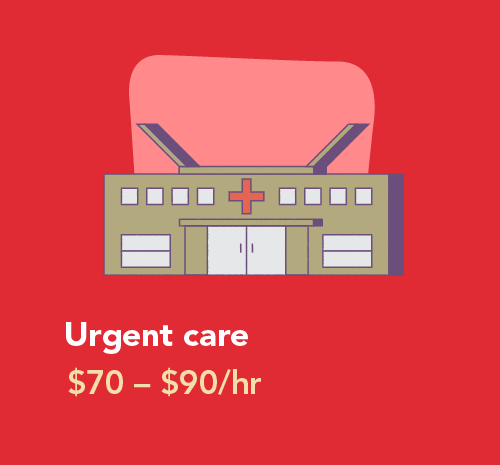
Urgent care ($70 – $90/hr)
Urgent care centers have expanded rapidly, offering convenient access for non-emergency conditions. According to the Urgent Care Association, the U.S. now has more than 15,000 urgent care centers, and more than 200 million patients are cared for in an urgent care setting each year.
These centers rely heavily on PAs to manage patient flow, particularly during peak seasons like flu outbreaks and holidays.
Using locum tenens to expand your career
Demand for locum tenens PAs spans a wide range of specialties, and understanding where that demand is strongest can help you make more informed career decisions. Whether you’re drawn to primary care, surgery, or acute care settings, locum tenens offers the flexibility to explore new environments while earning competitive pay.
As healthcare needs continue to evolve, PAs remain at the center of delivering accessible, high-quality care. Exploring locum tenens opportunities can be a strategic way to expand your experience, increase your earning potential, and shape a career that works for you.
Interested in exploring PA locum jobs? Check out our locum agency comparison tool for ideas of where to start.